“The Difference Was Immediate”
We hired TotalGuard after dealing with inconsistent service from other companies, and the difference was immediate.
W
Will J.
Lawn Care · Madison
Professional lawn fertilization and weed-suppression programs in Madison and Dane County, WI: soil-calibrated, slow-release, timed to Wisconsin's growing season.. TotalGuard Yard Care serves Madison, Middleton, Waunakee, Sun Prairie, Fitchburg, Verona, and all of Dane County, Wisconsin: consistent, reliable crews, transparent flat-rate pricing, and clear communication before any scope change. Get a free quote at (608) 535-6057.
Fertilization · Madison & Dane County, WI
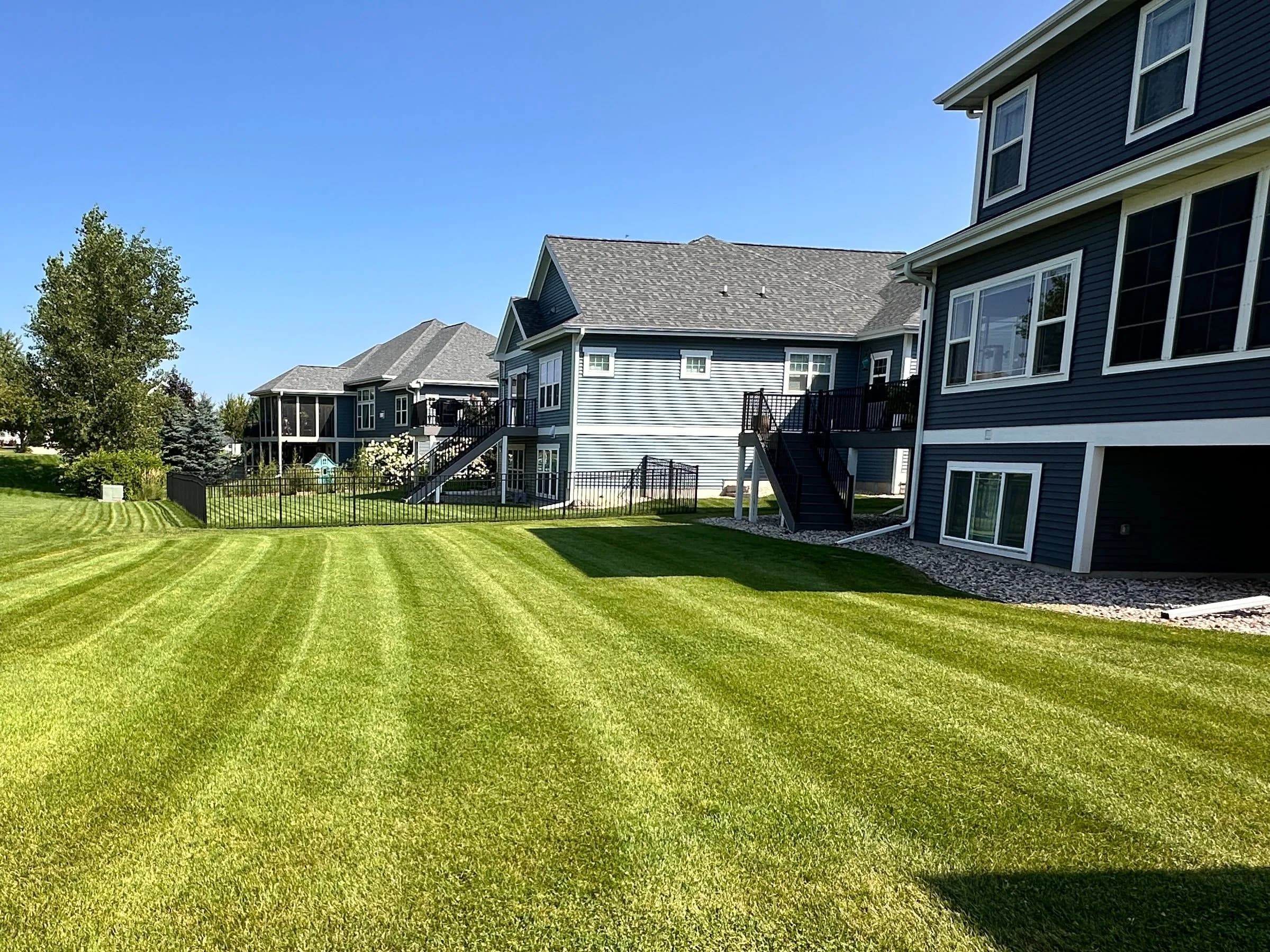
Slow-release, soil-calibrated feeding timed to Dane County's soil temps: thick, deep-green turf that naturally crowds weeds out.
Ideal for: thin, pale, or struggling lawns: homeowners who want deep color, weed-crowding density, and neighbor-impressing results.
Why homeowners switch to us
What you're living with
What TotalGuard does instead
Every visit, no add-ons
Granular fertilizer applications timed to Wisconsin's growing season, with weed suppression built into the products, not a separate service add-on.
Early Spring (March) → Late Spring (May) → Summer (June) → Early Fall (Sept) → Late Fall (Nov). Each round timed to Wisconsin’s actual growing season.
Dane County's heavy clay requires adjusted phosphorus and potassium rates. We blend for your soil, not a one-size-fits-all national mix.
Our fertilizer products include weed-and-feed chemistry: pre-emergent crabgrass blocker in Rounds 1 & 2 and selective broadleaf control in Rounds 2–4. No separate herbicide service needed for routine weed pressure.
High-potassium November application strengthens root systems before freeze. Your lawn enters winter strong and greens up faster in spring.
Every product we use meets Dane County's phosphorus-free requirements for watershed protection. Safe for pets once dry (typically 2 hours).
Every treated area is flagged per Wisconsin DATCP rules, and the owner can tell you the product and pet re-entry timing for any visit.
How it works
We measure your lawn and read Dane County's soil temps, then build a 5-round feeding program matched to your grass, not a one-bag-fits-all rate.
Every application lands in its window: pre-emergent before crabgrass wakes, the critical root-feed in fall, so no dollar of fertilizer is wasted.
We apply slow-release granular at calibrated rates, so color builds evenly for weeks instead of a green surge and a burn line.
You see density and color rebound inside one full season, and any question goes straight to the owner at (608) 535-6057.
1100+ properties maintained across Dane County
One county. Consistent, reliable crews. Yours next.
Get my free quoteTransparent, flat-rate pricing
Programs are priced by lawn size. Most Madison lawns (5,000–10,000 sq ft) run 5 rounds a year, April to October. Add aeration and overseeding in the fall for $425–$850. We measure and quote exact pricing before any work begins.
Make-It-Right Guarantee
Not satisfied? We return within 48 hours and make it right: free.
Wisconsin lawns need fertilizer in early spring (April–May), again in early summer (June–July), and most importantly in fall (September–October). Fall is the single most important application: cool-season grasses store nutrients in roots during dormancy, driving stronger green-up the following spring.
“The Difference Was Immediate”
We hired TotalGuard after dealing with inconsistent service from other companies, and the difference was immediate.
Will J.
Lawn Care · Madison
“Exceeded My Expectations”
TotalGuard Yard Care exceeded my expectations with their professionalism and attention to detail. My yard has never looked better.
Ian F.
Lawn Care · Madison
“Fantastic to Work With”
TotalGuard Yard Care has been fantastic to work with. The lawn mowing and trimming are always done professionally.
Kaleb D.
Lawn Mowing · Madison
Questions Madison homeowners ask
What people ask before booking fertilization, answered plainly.
We recommend 4-5 applications per year (spring through fall) for optimal lawn health. This schedule provides consistent nutrients for strong growth, deep roots, and resistance to stress and disease.
Each application includes premium slow-release fertilizer, pre-emergent weed control (spring), post-emergent weed control (as needed), and lawn analysis to adjust treatments. We customize each application to your lawn's current needs.
Yes! We use professional-grade products that are safe once dried (typically 2-4 hours). We'll provide specific re-entry guidelines with each application and can discuss organic options if you prefer.
You'll notice greener grass within 7-14 days of application. Long-term benefits like thicker turf, deeper roots, and better weed resistance develop over the full season program.
Overseeding is typically done in early fall as part of our fertilization program. We'll assess your lawn and recommend overseeding if thin areas need thickening or bare spots need filling.
Pricing depends on lawn size. Most residential properties run $225-$285 per application. A full season program is 5 applications, April to October, at $1,125-$1,425 for the year. Contact us for a free quote.
A complete 5-step program for a typical Madison residential lawn (5,000-10,000 sq ft) runs $1,125-$1,225 for the full season. That breaks down to $225-$245 per application across spring pre-emergent, late-spring weed-and-feed, summer maintenance, fall root builder, and winterizer. Larger lots (12,000-20,000 sq ft) in Middleton or Waunakee run $285 per application, $1,425 for the season. Lawns over 20,000 sq ft are quoted after a look.
The first application (pre-emergent + early spring feeding) should hit when soil temperature consistently reaches 50-55°F: typically late March to mid-April in Dane County. This timing matters: pre-emergent must go down BEFORE crabgrass germinates (around forsythia bloom), and feeding too early wastes product on dormant grass. We track soil temps daily through Wisconsin DNR data and the UW Madison Soil Lab. Madison clients often book their first app between April 5-20 depending on the spring.
Our 5-step program runs by the calendar. April: pre-emergent crabgrass control plus slow-release nitrogen for early green-up. Late May: post-emergent broadleaf control (dandelions, clover) with a balanced NPK feed. July: a summer-stress formula with iron and reduced nitrogen so we don't burn the lawn in heat. September: root-building fall feed using a high-phosphorus alternative (Dane County is phosphorus-restricted). Late October: a winterizer with high potassium to harden grass for the freeze. Everything is granular slow-release, no liquid sprays.
No, and this matters here. Dane County restricts phosphorus on established lawns within the Lake Mendota and Lake Monona watersheds (which is most of the metro). We use ZERO-phosphorus formulations exclusively unless your soil test shows specific P deficiency. We also keep all applications 20+ feet back from any waterway and never apply within 24 hours of forecasted rain. Our products are selected specifically for Wisconsin's stricter watershed rules: generic big-box fertilizers often violate them.
Three real differences. First, we use granular slow-release fertilizer exclusively: TruGreen's standard program is liquid, which works faster but requires more frequent reapplication. Second, our applications are calibrated to Madison soil temperature, not a national calendar: we delay or accelerate based on actual conditions. Third, we don't lock you into auto-renewal contracts. Most TruGreen complaints we hear from new Madison clients are about being charged for visits they didn't approve. We don't operate that way: every application is confirmed before we apply.
Yes, technically. A bag of Scotts 4-step from Lowe's runs $140-$180 and covers 10,000 sq ft. The honest comparison: DIY works if you carefully calibrate your spreader, apply at the exact right soil temperature, store granules in moisture-proof containers between apps, and don't double-spread (which burns the lawn). Most Madison DIY-ers we talk to spent $200+ and got streaky results because of spreader calibration mistakes. Our $250 program uses commercial products at correct rates with zero burn risk. The math gets close, but DIY usually costs more after factoring in mistakes.
Not the way we apply it. Burn happens when nitrogen rates are too high during heat stress (above 85°F) or when granules sit on wet grass. Our July application uses an iron-heavy, low-nitrogen formula specifically designed for summer: it greens the lawn without pushing growth that the roots can't support. We also water-in immediately if your sprinklers aren't running, and we skip applications if the forecast hits 90°F+ within 48 hours. Fitchburg and Verona lawns on south-facing slopes get extra care here.
Yellow lawn with fertilizer applied usually means one of three things in Madison: iron chlorosis (clay soil locks up iron: fixed by adding chelated iron at our July visit), nitrogen-leaching from heavy spring rain, or a fungal disease like rust or dollar spot. We do a free diagnostic walk on any program client whose lawn isn't responding. Often the fix is simple: a soil test (we offer free), an iron supplement, or aeration to break up Madison's notorious clay compaction so fertilizer can actually reach the roots.
If your lawn isn't visibly greener and thicker by the end of the second application, we'll do a third application at no charge AND issue a full refund on the first two if you still aren't satisfied. We've issued refunds maybe 4 times in 3 years because the program works when applied correctly. The only times we can't guarantee results: severe shade (under 4 hours of sun), unwatered lawns during drought, or properties with extensive bare soil that need overseeding before fertilization makes sense.
Water lightly within 24 hours AFTER application, not before. This activates slow-release granules and pushes nutrients into the soil where roots can absorb them. About 1/4 inch of water (15-20 minutes per zone on most Madison sprinkler systems) is perfect. If we apply before forecasted rain, that takes care of it. Don't water HEAVILY immediately after: that washes granules off the lawn before they dissolve. Madison's clay soil also runs off easily, so multiple short waterings beat one long soak.
Yes: fall fertilization (Step 4 in September) is the IDEAL time to overseed. We aerate, broadcast premium Kentucky bluegrass + perennial ryegrass blend, then apply a starter fertilizer. The aeration holes give seeds protected germination spots, and the cooler weather lets seedlings establish before winter. Overseeding is done together with core aeration, which runs $425-$850 depending on lawn size, and your September round is part of the 5-round fertilizer program.
Yes: required by Wisconsin DATCP (Department of Agriculture, Trade and Consumer Protection) for any commercial herbicide or pesticide application. Our lead applicator holds a current commercial pesticide license, and every crew member who handles weed-control products is at minimum a certified technician. We post the required notification flags after each application, keep detailed records available on request, and never apply during high winds (over 10 mph) to prevent drift to neighboring properties or waterways.
Yes: heavy presence in all three. Maple Bluff and Shorewood Hills lawns tend to have older established turf with deep thatch (we usually pair fertilization with dethatching there). Sun Prairie's newer subdivisions like Smith's Crossing have sandier subsoil that drains fast, so we adjust to lighter, more frequent applications. Other heavy service areas: Madison's east and west sides, Middleton, Waunakee, Fitchburg, Monona, Verona, McFarland, Cottage Grove, DeForest, Oregon, and Stoughton.
Most properties take 15-25 minutes per application. Larger lots (1 acre+) take 35-45 minutes. You don't need to be home: we apply granules with calibrated push spreaders, leave a service report at your door (or text it), and post notification flags as required. The only time we ask homeowners to be present is the initial property walk so we can identify problem areas, mark sprinkler heads, and discuss any organic-only zones (e.g., near vegetable gardens).
Light rain (under 1/2 inch) actually HELPS: it activates slow-release granules. Heavy rain (over 1 inch within 6 hours) can wash granules off, especially on Madison's clay-heavy lawns where water runs off rather than soaks in. We monitor the forecast hourly and reschedule if heavy rain is predicted within 24 hours. If we apply and unexpected heavy rain hits, we'll do a free spot reapplication on any visibly washed areas within 7 days. Just text us photos.
Yes. We offer targeted spot treatments outside the full program: grub control (June application, $85-$150), dandelion-only spot spray ($60-$120), creeping charlie treatment ($75-$145), and crabgrass post-emergent rescue ($70-$135). Most Madison clients with healthy turf don't need these: proper fertilization prevents most weed and pest issues. But for new clients inheriting a problem lawn, targeted treatments fix the immediate issue while we transition them to the full program for next season.
Common problems this fixes
Circular or irregular dead spots that show up in July and August heat.
Diagnose itSpongy turf that lifts like a carpet, often with digging damage from animals hunting grubs underneath.
Diagnose itBright green rings around a dead, straw-colored center, usually in the same few spots a dog favors.
Diagnose itLight green, coarse-bladed patches that spread wide through July heat, then die and leave bare dirt every fall.
Diagnose itPick your city to see what we run there: 12 Dane County communities, same crew, same day, every week.
Don't see your area? Contact us. We can often travel further to get the job done.
TotalGuard Yard Care
More on fertilization
The combined 5-step fertilization and weed control program, priced 20% below booking both separately.
See moreEvery pricing factor broken down by lot size and program length.
See moreSpring green-up, and the September to October feeding that matters most.
See moreThe main fall feeding and the winterizer, timed to the Madison freeze.
See moreGet a free lawn analysis and fast, flat-rate program pricing.
Prefer to text? Text us at (608) 535-6057
Make-It-Right Guarantee · Licensed & insured · Consistent, reliable crews